
Mini-Split vs. Central AC in the Bay Area: Which Is Right for Your Home?
Bay Area homes have unique challenges—many lack ductwork, have additions, or need room-by-room control. Here's how to decide between a mini-split and central AC.
24/7 Emergency Service • Same-day appointments • Free estimates on installations
# Mini-Split vs. Central AC in the Bay Area: Which Is Right for Your Home?
One of the most common questions we hear from Bay Area homeowners: "Should I install a ductless mini-split or central AC?" It's a great question—and the right answer depends on your specific home, budget, and comfort needs.
After installing thousands of both types of systems across San Mateo County, Santa Clara County, and San Francisco, we've developed a clear framework for making this decision.
## The Key Difference
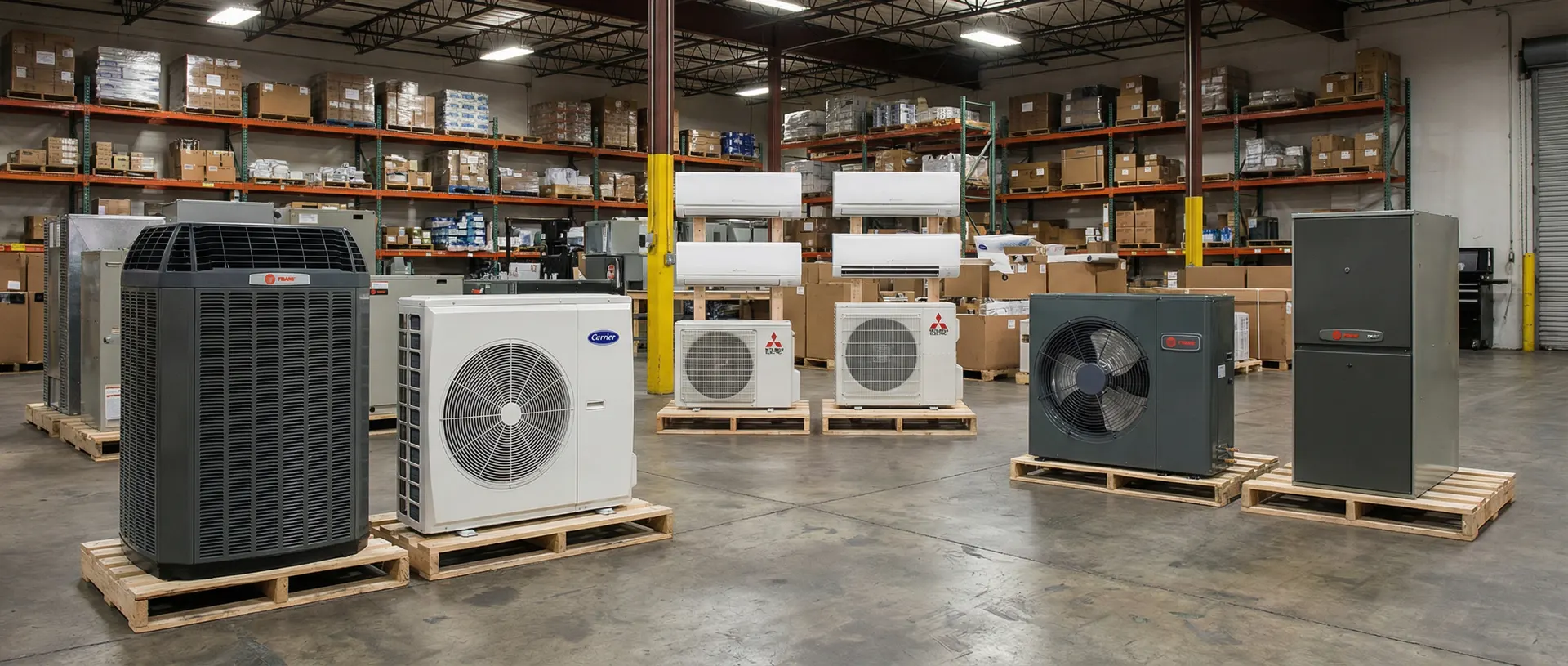
**Central AC** uses a single outdoor condenser connected to an indoor air handler that distributes cooled air through ductwork to every room.
**Ductless Mini-Splits** use an outdoor condenser connected to one or more wall-mounted indoor units, each independently controlled—no ductwork required.
## When Mini-Splits Win in the Bay Area
### 1. Homes Without Existing Ductwork Many Bay Area homes—especially in San Francisco's Inner Sunset, the Outer Richmond, Daly City row houses, and older Peninsula bungalows—were built with radiant heat and no ductwork. Adding ducts to these homes costs $5,000-12,000 and often requires significant demolition.
A multi-zone mini-split system bypasses this entirely. Three indoor heads can heat and cool a 1,500 sq ft home with no ductwork for $12,000-18,000 installed—comparable to central AC plus new ductwork.
### 2. Home Additions and ADUs The Bay Area's ADU boom has made mini-splits the default choice for accessory dwelling units. A single-zone mini-split provides heating and cooling for a 400-800 sq ft ADU for $4,000-6,500 installed. No need to extend existing ductwork or upsize the main system.
### 3. Room-by-Room Temperature Control Bay Area homes often have dramatic temperature differences between rooms. A south-facing living room might be 80°F while a north-facing bedroom is 65°F. Mini-splits with individual zone control let each room maintain its own temperature—a level of comfort central AC simply can't match without expensive zoning dampers.
### 4. Extreme Efficiency Premium mini-splits from Mitsubishi, Daikin, and Fujitsu achieve 30+ SEER ratings—roughly double what the best central AC systems offer. In the Bay Area's mild climate, this translates to remarkably low operating costs. We've seen mini-split owners report $30-50/month cooling costs for entire homes during summer.
### 5. Heating + Cooling in One Every mini-split is a heat pump by default. In the Bay Area's mild winters, they provide efficient heating without a separate furnace. This dual function makes them especially cost-effective since you're buying one system instead of two.
## When Central AC Wins
### 1. Homes With Good Existing Ductwork If your home already has well-designed, well-sealed ductwork, central AC is almost always the more cost-effective choice. You're looking at $5,800-9,500 for a new central AC unit versus $12,000-22,000 for a multi-zone mini-split system that covers the whole house.
### 2. Aesthetics Let's be honest: wall-mounted mini-split heads are visible. They're about 32 inches wide, 12 inches tall, and mount 7 feet up on the wall. Some homeowners—especially those with carefully designed interiors—find them unattractive.
Central AC is invisible. The condenser sits outside, the air handler hides in a closet or attic, and all you see are discrete vents.
For homes where aesthetics matter, there are alternatives: ceiling cassette mini-splits (flush-mount in the ceiling) and slim-duct mini-splits (hidden behind a small soffit). But these cost 30-50% more than standard wall units.
### 3. Consistent Whole-Home Temperature Central AC circulates air throughout the entire home through a network of supply and return ducts. This creates more uniform temperatures and better air circulation. Mini-splits can sometimes create hot/cold spots in large open floor plans where a single head serves a big space.
### 4. Filtration and Air Quality Central AC systems offer superior filtration options. A 4-5 inch media filter or whole-home air cleaner connected to a central system filters all the air in your home every time the system cycles. Mini-split filters are basic by comparison, though some models now offer plasma filtration and ionization.
### 5. Lower Upfront Cost (with ducts) For a 3-bedroom home with existing ductwork, a quality central AC system costs roughly half what a 4-zone mini-split system would. The math changes if you need new ducts, but for existing homes in good condition, central AC is the budget winner.
## The Bay Area Climate Factor
The Bay Area's unique microclimate matters here:
**Coastal areas** (Pacifica, Half Moon Bay, Daly City, Outer Sunset): These areas rarely need AC at all. A single mini-split in the living room might be all you need for the 10-20 hot days per year. Cost: $4,000-5,500 for a single zone.
**Peninsula and mid-Peninsula** (San Mateo, Redwood City, Palo Alto): Moderate summer heat (high 80s to low 90s). Either system works well. Choose based on whether you have ductwork.
**South Bay and inland valleys** (San Jose, Fremont, Sunnyvale): Regular 90-100°F summers. A robust cooling system is essential. Central AC often makes sense here for consistent whole-home cooling. Multi-zone mini-splits also work well but require enough heads to cover all living spaces.
## Cost Comparison
| Scenario | Central AC | Mini-Split | |---|---|---| | 1,500 sq ft home WITH ducts | $6,500-8,500 | $14,000-20,000 (4 zones) | | 1,500 sq ft home WITHOUT ducts | $12,000-18,000 (AC + new ducts) | $14,000-20,000 (4 zones) | | 800 sq ft ADU/addition | $3,500-5,500 (if extending ducts) | $4,000-6,500 (1 zone) | | Single room | Not practical | $4,000-5,500 (1 zone) |
## Energy Cost Comparison
Estimated annual cooling costs for a typical 1,500 sq ft Bay Area home (PG&E rates):
- **Central AC (16 SEER2)**: $450-650/year - **Mini-Split (20+ SEER)**: $250-400/year
The operating cost difference narrows if you use mini-splits for heating too, since they replace gas furnace costs.
## Our Recommendation
**Go mini-split if**: No existing ductwork, adding rooms/ADU, want room-by-room control, prioritize efficiency, or live in a coastal area where you rarely need AC.
**Go central AC if**: You have good existing ductwork, want invisible installation, need strong whole-home filtration, or want the lowest upfront cost.
**Consider a hybrid**: Some Bay Area homes benefit from keeping central heating (gas furnace) while adding a mini-split to a hot room, a new addition, or a converted garage. This targeted approach costs $4,000-6,500 and solves the specific problem without replacing the entire system.
We help Bay Area homeowners make this decision every day. Call us for a free consultation—we'll evaluate your home and recommend the right system for your specific situation.
Tags:
About Trane, Carrier & Mitsubishi HVAC Services
Our team of certified HVAC professionals shares expert advice to help homeowners maintain comfort and efficiency in their homes.
Related Services
Related Articles
The Complete Guide to Ductless Mini-Split Systems
Ductless mini-splits offer efficient heating and cooling without ductwork. Learn if they're right for your Bay Area home.
buying-guidesBest Air Conditioning Brands for Bay Area Homes in 2024
Choosing the right AC brand affects your comfort, energy bills, and long-term satisfaction. Here's our expert analysis of the best options for Bay Area homeowners.
buying-guidesHow Much Does HVAC Replacement Cost in the Bay Area? (2026 Guide)
Bay Area HVAC replacement costs are higher than the national average due to labor rates, permits, and seismic requirements. Here's what you should actually budget in 2026.
Need HVAC Help?
Our expert technicians are ready to help with all your heating and cooling needs.
Call (650) 540-7205Book ServiceHVAC Maintenance Checklist
Keep your system running efficiently with our seasonal maintenance checklist. Covers filters, coils, drainage, and more.
- Spring & fall tune-up steps
- Filter replacement schedule
- Warning signs to watch for